
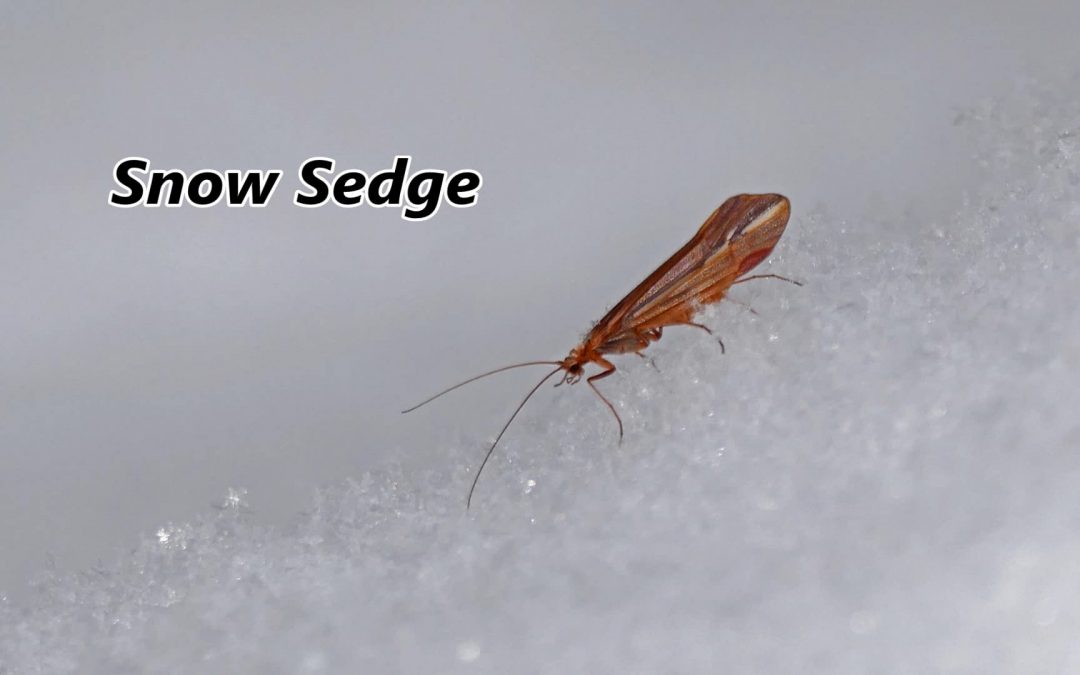
- Snow Sedge shows one walking on the snow in Mendenhall Glacier area in Juneau, Alaska on December 5, 2021.
- The snow sedge Psychoglypha subborealis.
- Sedge flies, or caddisflies, belong to the insect order Trichoptera and are best known for the portable cases constructed by the aquatic larvae of most species. The cases provide camouflage, safety from predators, and a place to transform into the adult form. Adult caddisflies are moth-like with hairy wings that are held like a pitched roof over the body. Most adult caddisflies emerge from the water in spring or summer, mate, lay eggs, and die before fall; the next generation overwinters in the egg or larval stage. The few species that overwinter as adults are called snow sedges and may be seen crawling on snow in subfreezing temperatures. ·
- Dr. George Roemhild noticed adult snow sedges at the bottom of holes in the snow, their dark wings having absorbed the sun caused them to melt out of sight. ·
- Snow sedge larvae are commonly found in water bodies that shrink in size or dry up during winter.
- Caddisflies that use temporary water bodies usually have egg masses that are protected from desiccation by a skin. Snow sedge egg masses lack an outer skin and must remain in water for the egg and newly hatched larvae to survive. ·
- The overwintering snow sedge adult may be an adaptation for keeping the eggs safe (inside the female) from desiccation or freezing until they can be laid the following spring. · The snow sedge Glyphopsyche irrorata lives for up to 9 months as an adult, 9 times longer than the typical caddisfly.
Snow Sedge
https://vimeo.com/653534982